Part of the Shooter shelf
FPS AI game maker
An FPS AI game maker has to make the threat, the weapon and the room legible before it adds a campaign. An FPS is a camera, a weapon and a room that answers back. This shelf has three first-person shooters: a cyberpunk breach, a bunker wave and a low-poly speed run. Play one before you ask a model to invent a shooter.
What an FPS shelf has to prove
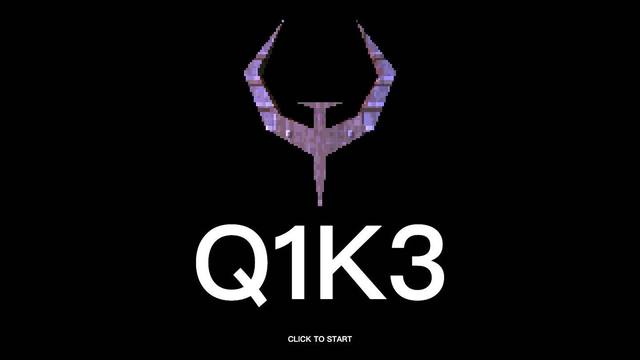
The first minute has to answer three questions: where is the threat, what does the weapon do and where can I move? The 3 builds here answer them differently. Breach Protocol is a rooftop wave shooter; Operation Ironhold is a bunker defence; Q1K3 is a fast low-poly run. The shelf is small because a first-person camera exposes every weak hitbox and every flat room.
A shelf can show whether aim, cover and wave pressure are legible. It cannot show a campaign, a weapon progression tree or a netcode stack. Those are production and engineering problems. The site also has a first-person exploration build, Jungle Trail, but it is not counted as an FPS here.
Start with these builds
3 REAL BUILDS · NOT MOCKUPS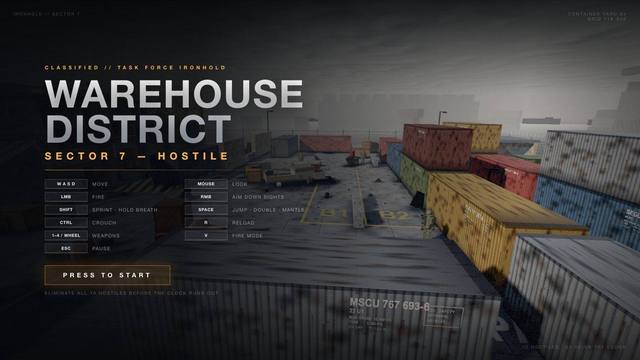
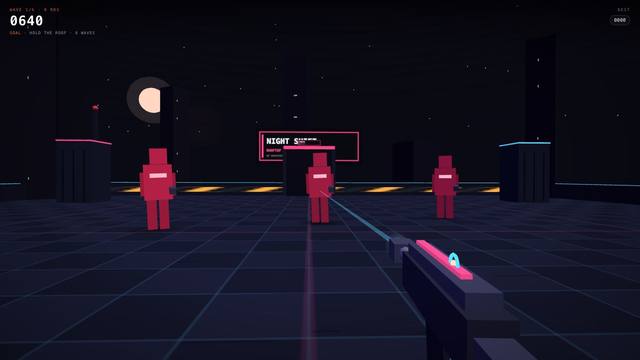
The six parts of an FPS
Use these checks when the brief depends on a first-person camera. They matter less for a top-down shooter where the whole room is visible.
A camera that aims
The crosshair, the weapon and the mouse sensitivity should agree. A camera that drifts after a turn makes every shot feel accidental.
A threat you can read
Enemies need a silhouette and a spawn direction. If a target appears inside the player's blind spot with no sound, the room is unfair.
A weapon with a rhythm
Fire rate, reload and recoil are one system. The player should feel the difference between a burst and a hold.
A reason to move
Cover, a flank or a pickup should pull the player out of one corner. A room that rewards standing still is a turret game.
A health and ammo cost
The HUD should show what the next mistake costs. A bar that only changes after death is not feedback.
A wave with an end
The player needs to know when the room is clear. A counter that never resolves turns the loop into a chore.
The full fps shelf
Browse all FPS matches →| Build | Genre | Input |
|---|---|---|
| Operation Ironhold | first-person shooter | keyboard + mouse |
| Breach Protocol | first-person wave shooter | keyboard or touch |
| Q1K3 | first-person shooter | keyboard + mouse |
| Saltwake | first-person shooter | keyboard or touch |
| Saltwatch | first-person shooter | keyboard or touch |
| Sublevel Nine | first-person shooter | keyboard or touch |
| Faultless | first-person shooter | keyboard or touch |
| Dustline Post | first-person shooter | keyboard or touch |
| Last Signal | first-person shooter | keyboard or touch |
| Riftwatch | first-person shooter | keyboard or touch |
| Nightshift Yard | first-person shooter | keyboard or touch |
| The Complex | first-person shooter | keyboard or touch |
| Fracture Line | first-person shooter | keyboard or touch |
| Faultline Relay | first-person shooter | keyboard or touch |
Swipe the table to see input.
Where this shelf stops
- Scoping one first-person room around aim, cover and a wave.
- Comparing a rooftop wave, a bunker defence and a low-poly speed run.
- Checking whether the camera, crosshair and threat are readable.
- Building a campaign with progression and set pieces.
- Tuning netcode, matchmaking or competitive maps.
- Producing weapon art, animation and sound at commercial scale.
- Three short browser FPS builds.
- No campaign, weapon tree or online multiplayer.
- No claim that any build is a complete commercial shooter.
FPS tool pages vs. this shelf
Tool pages promise a shooter from a prompt. This shelf shows what the camera, the weapon and the wave actually do.
| Part | Tool pages promise | What this shelf gives you |
|---|---|---|
| Engine | A prompt can request a first-person level. | Every build is a fixed browser room with a visible weapon. |
| Weapon feel | Often described as realistic. | You can test the fire rate, reload and recoil in the first minute. |
| Multiplayer | A tool may promise online matches. | These are single-player wave rooms with no netcode. |
| Full game | A tool may promise a complete shooter. | These are prototypes, not campaigns. |
Swipe the table to read all three columns.
How matching works
The matcher starts with “first-person shooter” and returns the closest playable build on this shelf. Read the matching method → Not sure which shelf fits?Open the genre map →
FPS questions
What is an FPS AI game maker?
It is a shelf of playable first-person shooters with a matcher on top. You describe the shooter you want, and the matcher returns the closest existing build; it does not generate a new game. The shelf is small because a first-person camera exposes every weak hitbox and flat room.
How many FPS builds are on the shelf?
Three at the last count. A fourth first-person exploration build, Jungle Trail, is on the site but is not counted as an FPS. Breach Protocol, Operation Ironhold and Q1K3 are the three; Jungle Trail is exploration, not combat. The count stays at three.
Can I play these with a mouse and keyboard?
Yes. The builds are keyboard and mouse first; some also expose touch controls. Check the build page for the exact input. Aim is mouse-first; some builds also expose touch, but the desktop input is the intended test. Check the build page.
Is there online multiplayer?
No. The builds are single-player wave or room experiences with no netcode. All three are single-player wave or room runs, so there is no lobby, matchmaking or rollback netcode. The shelf tests the first room, not a match. That limit is deliberate.
Can I export an FPS?
No. The matcher is not an engine and does not export a project. The builds run in the browser. If you want to make an FPS game with AI, start by testing whether the first room reads. The builds run in the browser; there is no project file to take into an engine.
Are these full campaigns?
No. They are short rooms and wave runs, not a campaign with levels and progression. An FPS game generator would need levels and progression; this shelf is a set of short rooms. They are short rooms and wave runs, so progression and a campaign are outside the shelf.
Sources and definitions
- First-person shooterThe camera, weapon and room conventions behind this shelf.
- Shooter gameThe parent genre and its aiming models.