Family: Worlds and systems
Adventure AI game maker
An adventure AI game maker has to make exploration and glider legible before it adds features. Adventure is a promise about a place: a landmark, a route and a reason to go around the next corner. This shelf has first-person exploration, gliders, 3D collectathons, stealth adventures and two ARPGs. It is broader than a story-game shelf and thinner than a puzzle-adventure one.
What makes an adventure hold up?
An adventure needs a place worth crossing. That can be a room with two exits, a moon rover with a horizon, or a jungle trail with a waterfall. The common thread is a landmark the player can remember and a route that changes what they can reach.
This shelf has 39 builds, and it is broader than it is deep. Moon Rover and Jungle Trail are first-person exploration. Ice Vault and Dream Shards are 3D collectathons. A run of gliders turns traversal into a one-input score chase. The Legend of JS and the two ARPGs add room-based combat.
That mix is useful for a brief. A model can describe a world, a landmark and a collectible. The shelf shows whether the player can read the route without a quest marker, and whether the reward at the end changes the next decision.
Start with these builds
6 REAL BUILDS · NOT MOCKUPS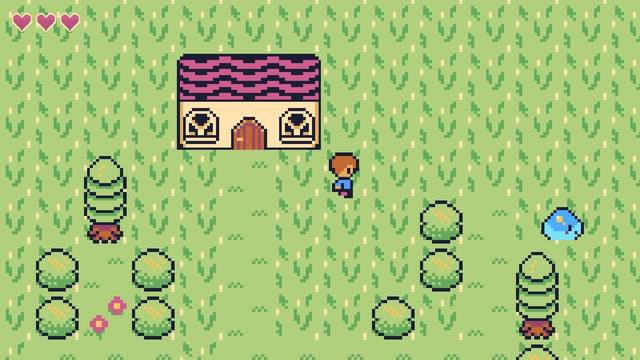
The Legend of JS
2DExplore a small pixel kingdom, slash slimes and step into a dungeon.
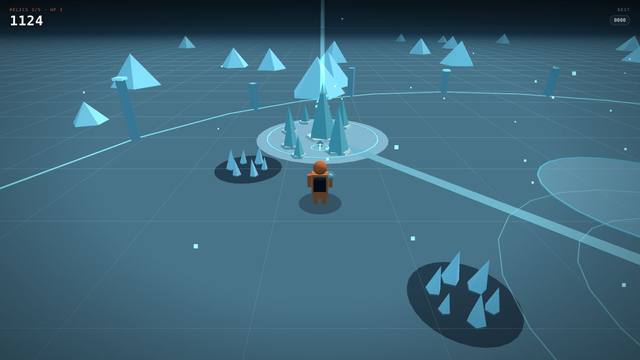
Ice Vault
3DSweep a frozen arena for relics, thread between hazard patches, and finish the set to bring the exit portal up.
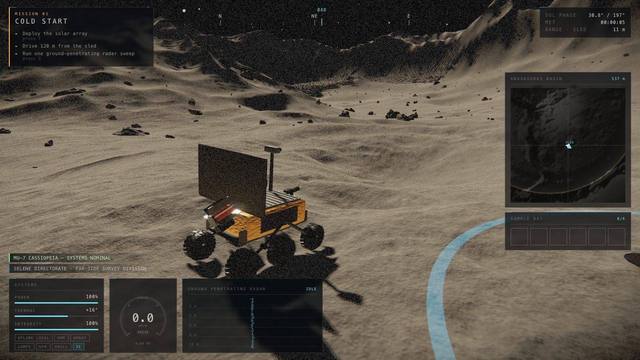
Moon Rover
3DDrive a survey rover across a procedurally generated lunar surface.
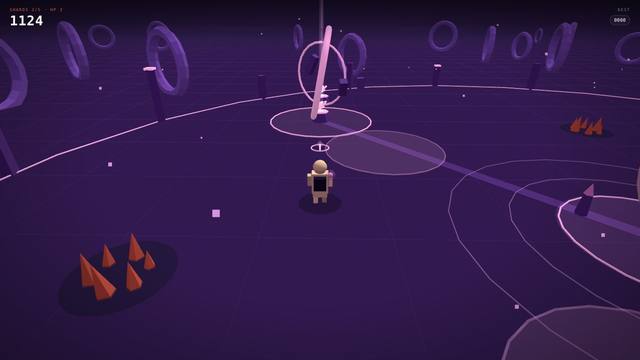
Dream Shards
3DCollect relics across a violet dusk arena, where floating rings and soft color make hazard patches easy to miss.
Jungle Trail
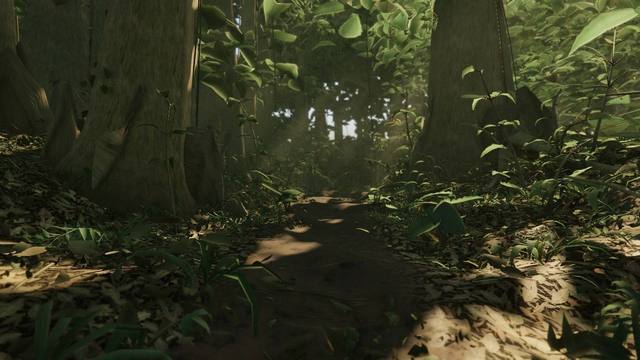
3DWalk a winding jungle trail into overgrown stone ruins and a waterfall.
Frostvault
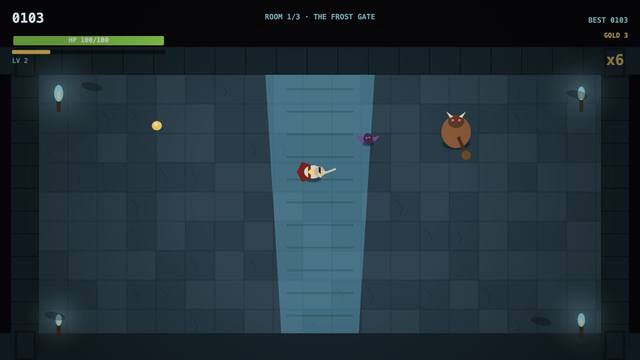
2DRaid a frozen archive, break the bone patrols, and take the Warden’s crown before the cold finishes the job.
The six parts of an adventure
Use these checks when the brief depends on exploration and route reading. They matter less for a dialogue-heavy adventure, where character writing carries more of the loop.
A landmark
A landmark is a memory hook: the player sees it, crosses toward it, and uses it to know where they are. Without one, a large map becomes a texture.
A traversal verb
Walking is not a traversal verb by itself. A glide, a dash, a jump or a vehicle gives the player a way to change the route.
A clue, not a marker
A good clue points without taking the discovery away. A marker tells the player where to go; a clue tells them what to look for.
A reason to detour
The collectible has to answer a question the player already has: can I reach that ledge, is this route faster, what is behind the door?
A return path
The way back should teach something the way in did not. A shortcut, a new ability or a changed state makes the same space feel different.
An ending
An adventure needs a place to stop. A summit, a final room or a revealed map gives the route a shape and gives the player a reason to finish.
The full adventure shelf
Browse all Adventure matches →| Build | Genre | Input |
|---|---|---|
| The Legend of JS | top-down action adventure | keyboard |
| Ice Vault | 3d explorer | keyboard or touch |
| Moon Rover | exploration | keyboard + mouse |
| Dream Shards | arcade explorer | keyboard or touch |
| Jungle Trail | first-person exploration | keyboard + mouse |
| Frostvault | action RPG | keyboard or touch |
| Tiny Frontier | stealth | keyboard or touch |
| Desert Wing | glider | keyboard or touch |
| Aurora Glide | arcade flight | keyboard or touch |
| Ember Wing | arcade glider | keyboard or touch |
| Rain Glide | arcade flight | keyboard or touch |
| Ruin Wing | arcade glider | keyboard or touch |
| Confetti Glide | one-button arcade | keyboard or touch |
| Canyon Wind | flight arcade | keyboard or touch |
| Cloud Drift | arcade glider | keyboard or touch |
| Jungle Relics | 3d collectathon | keyboard or touch |
| Emberfall | action RPG | keyboard or touch |
| Waterways | exploration | keyboard or touch |
| Cloud Sect | action RPG | keyboard or touch |
| Pocket Quest | action RPG | keyboard or touch |
| Delve Reel | roguelike | keyboard or touch |
| Fogmoor | open-world exploration | keyboard or touch |
| Dustreach | open-world exploration | keyboard or touch |
| Bayhold | open-world exploration | keyboard or touch |
| Aerie | open-world exploration | keyboard or touch |
| Dawnward | open-world exploration | keyboard or touch |
| Long Ascent | open-world exploration | keyboard or touch |
| Spirelight | open-world exploration | keyboard or touch |
| Isle Verde | open-world exploration | keyboard or touch |
| Deepember | open-world exploration | keyboard or touch |
| Harborlight | open-world exploration | keyboard or touch |
| Cinder Port | open-world exploration | keyboard or touch |
| Marlow Sound | open-world exploration | keyboard or touch |
| Tide Neon | open-world exploration | keyboard or touch |
| Cinder Sound | open-world exploration | keyboard or touch |
| Halcyon Reach | open-world exploration | keyboard or touch |
| Gifts for the Tall | open-world exploration | keyboard or touch |
| Bellwether Tide | open-world exploration | keyboard or touch |
| Paper Crossing | open-world exploration | keyboard or touch |
Swipe the table to see input.
Where an AI adventure game generator stops
- Testing landmark readability and route shape.
- Comparing first-person, glider and room-based exploration.
- Finding the traversal verb for an adventure brief.
- Authored dialogue, quests and branching story.
- A large open world with persistent state.
- A point-and-click inventory puzzle chain.
- Short exploration loops, not a campaign.
- No dialogue trees or quest log.
- Two ARPGs add combat; the rest are traversal-first.
What adventure tool pages promise
Tool pages promise generated worlds, quests and branching stories. A seventeen-build shelf cannot prove a narrative engine. It can show you whether a landmark reads, whether a route is legible, and whether the reward at the end changes the next decision.
| Part | Tool pages promise | What this shelf gives you |
|---|---|---|
| World and story | Generated maps, quests, NPCs and dialogue. | Short explorable spaces and room loops. No quest log and no dialogue system. |
| Shelf scope | A claim to cover the whole genre. | Exploration, glider, collectathon, action adventure |
| What it cannot prove | A finished game in every mode. | Authored dialogue, quests and branching story. |
Swipe the table to read all three columns.
How matching works
The matcher starts with “adventure” and returns the closest playable build on this shelf. Read the matching method → Not sure which shelf fits?Open the genre map →
Three places to start
The Legend of JS
The clearest room-and-dungeon reference: a top-down space, a few enemies, a door. Use it to test whether a room reads without a map.
Play the build →Moon Rover
A first-person rover on a moon surface. The horizon is the landmark and the drive is the verb; a good test of whether exploration can work without a quest marker.
Play the build →Ice Vault
A 3D collectathon with a dash. Use it to see how a movement upgrade changes the route rather than just the speed.
Play the build →Adventure questions
What counts as an adventure game here?
Exploration, glider, collectathon, action adventure — 39 builds in total. Short exploration loops, not a campaign. No dialogue trees or quest log. An adventure needs a place worth crossing. Exploration, glider, collectathon, action adventure. Authored dialogue, quests and branching story. Comparing first-person, glider and room-based exploration.
What is an adventure AI game maker?
It is a shelf, not a generator. This shelf has 39 builds, and it is broader than it is deep. Short explorable spaces and room loops. No quest log and no dialogue system. The matcher reads your brief and returns one build, so you can play the loop before you commission it.
Can I make an adventure game with AI?
You can brief one, but this page cannot generate it. Start with The Legend of JS: The clearest room-and-dungeon reference: a top-down space, a few enemies, a door. Then write a spec; the part a model must prove is authored dialogue, quests and branching story.
Is there an adventure game generator?
Not on this site. Tool pages promise: “Generated maps, quests, NPCs and dialogue.” This shelf answers: “Short explorable spaces and room loops. No quest log and no dialogue system.” A generator can produce code or assets, but the hard part is a large open world with persistent state. Compare The Legend of JS and Moon Rover first.
Are these adventure games free?
Yes. All 39 builds run in the browser with no download and no signup; input is keyboard + mouse or touch. The shelf is for testing landmark readability and route shape. Paid remix and export are not open yet, so play The Legend of JS before you commission one.
Do browser adventure games work on a phone?
Most do. Input is keyboard + mouse or touch. No dialogue trees or quest log. The Legend of JS is the first build to try; Moon Rover is easier on a larger screen. Each game page lists controls before you start, so test on the device you will use.
Which adventure games should I play first?
Start with The Legend of JS: The clearest room-and-dungeon reference: a top-down space, a few enemies, a door. Then Moon Rover: A first-person rover on a moon surface. Ice Vault adds a third pressure. Two builds are enough to feel the range before you brief a model.
Sources and definitions
- Adventure gameWikipedia: the genre and its exploration roots.
- Level designWikipedia: landmarks, routes and player guidance.
More shelves in this family
The Adventure shelf covers Exploration, glider, collectathon, action adventure. Start with RPG, then compare the rest of the family.