Family: Worlds and systems
Simulation AI game maker
A simulation AI game maker has to make management and balance legible before it adds features. Simulation is a promise about systems: a small set of inputs should produce a readable result, and the next decision should be different because of it. This shelf is honest about its depth: light management, a cargo balance game, a school day and eight arcade grow loops.
What makes a simulation hold up?
A simulation is a loop of inputs and consequences. The player changes something, the system answers, and the answer changes the next choice. The genre gets deep when those answers interact; this shelf mostly stays at the first layer.
That is deliberate. Market Farm is arcade management, Cargo Tide is a balance game, School Day is a light choice-stacking sim. The eight grow builds are arcade systems: collect, grow, avoid a predator. They are not Cities: Skylines, and the page says so.
The useful test is still here. Play Cargo Tide for a system you can read in one round, then Market Farm for a system that asks you to plan a few rounds ahead. If the model cannot explain what changed, it has given you a theme rather than a simulation.
Start with these builds
6 REAL BUILDS · NOT MOCKUPS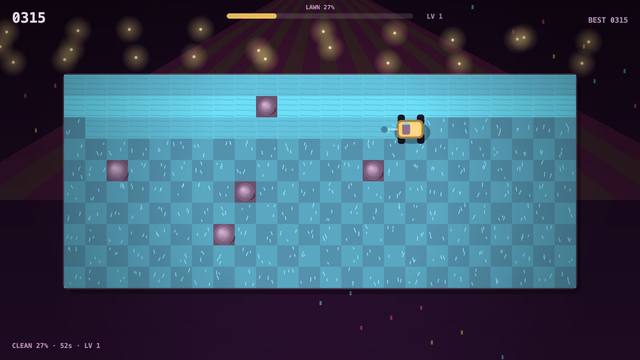
Parade
2DMow the striped grounds for anything smaller than you, and watch the bigger shapes close in as your radius grows.
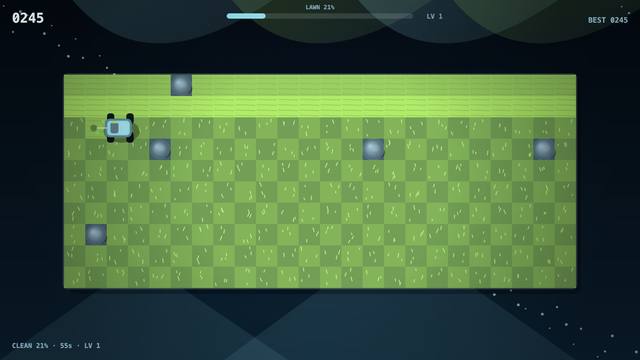
Snowball
2DMove across ice blue and collect smaller shapes, but steer clear of bigger ones because one collision can wipe your gains.
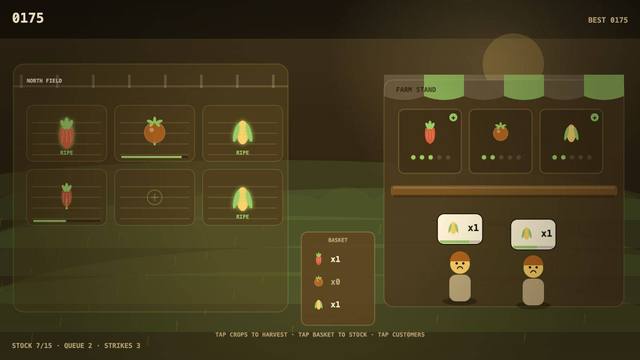
Market Farm
2DPlant, harvest, and stock your stall before the queue of customers gives up and walks.
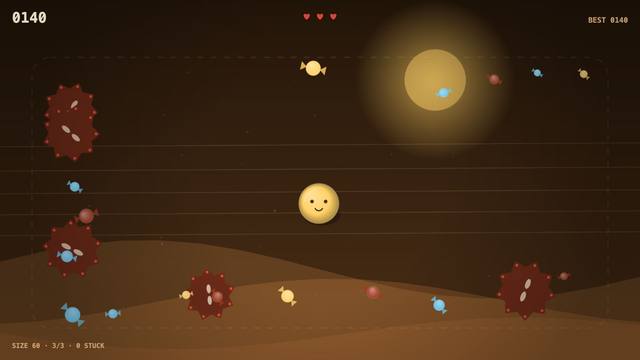
Sand Swarm
2DMove through dune gold, collect smaller pieces, and steer clear of anything larger because one bad contact ends the run.
Dust Devil
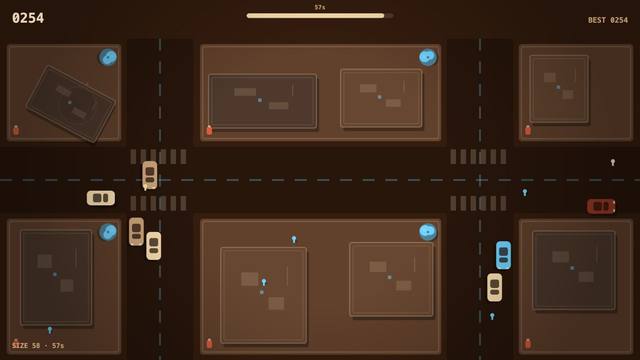
2DSink a hole into sun-bleached dust and swallow what fits; your radius grows, and so does what can hurt you.
School Day
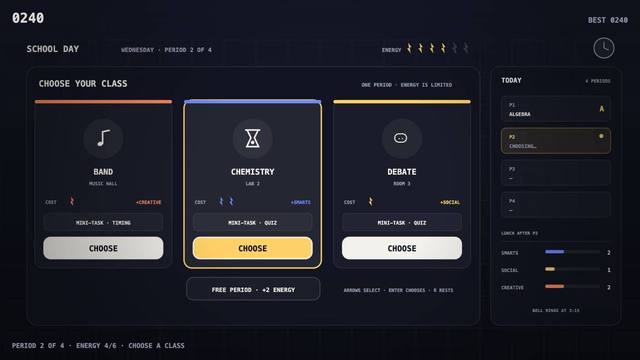
2DManage a school day in short runs, choosing rooms and responses while small decisions stack into pressure.
The six parts of a simulation
Use these checks when the brief depends on a readable system. They matter less for a narrative sim, where characters and story carry more of the loop.
An input
The player needs one clear action that changes the system. If the input is buried in menus, the simulation is a spreadsheet with a delay.
A visible output
The system should answer immediately: a price, a crowd, a growth ring. The player needs to connect the action to the result before the next choice.
A bottleneck
A good simulation has one constraint that makes the choice hard. Money, time, space or attention; not all four at once.
A feedback loop
The loop should tell the player whether the plan is working. A number that only moves at the end is a receipt, not feedback.
A failure state
Failure should explain which system broke. A bank balance, a missed quota or a lost crowd is more useful than a generic game over.
A reason to repeat
The next run needs a different opening. A new constraint or a new target is enough; a bigger multiplier is not.
The full simulation shelf
Browse all Simulation matches →| Build | Genre | Input |
|---|---|---|
| Parade | arcade | keyboard or touch |
| Snowball | arcade grow | keyboard or touch |
| Market Farm | arcade management | keyboard or touch |
| Sand Swarm | arcade grow | keyboard or touch |
| Dust Devil | casual arcade | mouse or tap |
| School Day | school-day roguelike | keyboard or touch |
| Cargo Tide | balance management | keyboard or touch |
| Ash Drift | arcade grower | keyboard or touch |
| Night Crowd | arcade swallow grower | keyboard or touch |
| Ruin Bloom | arcade absorb grower | keyboard or touch |
| Dream Bloom | arcade | keyboard or touch |
| Orrery | space sim | keyboard or touch |
Swipe the table to see input.
Builds by subgenre
Where an AI simulation game generator stops
- Testing whether one system reads in a short session.
- Comparing management, balance and arcade grow loops.
- Finding the first constraint for a sim brief.
- Deep economies with many interacting systems.
- Crowd simulation, schedules and agent AI.
- Long-session progression and save states.
- Light management, not a deep sim.
- Eight grow loops are arcade systems, not economies.
- No city builder, colony sim or life sim.
What simulation tool pages promise
Tool pages promise generated economies, schedules and agent systems. An eleven-build shelf cannot prove a deep simulation. It can show you whether one constraint reads, whether feedback arrives in time and whether the next run asks a different question.
| Part | Tool pages promise | What this shelf gives you |
|---|---|---|
| Systems depth | Interacting economies, needs and schedules. | One or two constraints per build. Eight grow loops are arcade systems, not economies. |
| Shelf scope | A claim to cover the whole genre. | Management, balance, grow |
| What it cannot prove | A finished game in every mode. | Deep economies with many interacting systems. |
Swipe the table to read all three columns.
How matching works
The matcher starts with “simulation” and returns the closest playable build on this shelf. Read the matching method → Not sure which shelf fits?Open the genre map →
Three systems to compare
Cargo Tide
A balance game with short rounds. Start here to test whether one constraint can carry a session without a menu.
Play the build →Market Farm
Arcade management with stock and time pressure. Compare it with Cargo Tide to see how a second constraint changes the plan.
Play the build →Snowball
A grow loop in the arcade sense: collect, expand, avoid losing the route. It is not an economy sim, but it shows how feedback can carry a short run.
Play the build →Simulation questions
What counts as a simulation game here?
Simulation here is a loop of inputs and consequences: change something, read the answer, change the next choice. 12 builds cover light management, a cargo balance game, a school day and eight arcade grow loops. There is no city builder, colony sim or deep economy, so the shelf tests one readable system.
What is a simulation AI game maker?
This is an eleven-build systems shelf, not a city generator. Each build fixes one or two constraints, so you can see whether a result is explainable and whether the next decision changes. The matcher returns one build from your brief, and you finish one round before commissioning an economy.
Can I make a simulation game with AI?
Play Cargo Tide and change one load, then watch the balance answer. If you cannot explain why the round tipped, the system is not yet readable. Write that explanation into the brief. A model can add supply chains later, but it cannot tune an economy it has never seen you balance.
Is there a simulation game generator?
No generator on this page. A tool page can promise interacting needs and schedules; the shelf shows eleven short loops and the exact constraint where the plan breaks. The missing part is the deep economy, the agent AI and the save state, and those are systems work rather than a prompt.
Are these simulation games free?
All 12 builds are free browser games. No account, no download and no ad gate; keyboard and touch both work. Remix and export are not open yet. Play Cargo Tide first, because the shelf is for testing one constraint, not for replacing a management sim with a city.
Do browser simulation games work on a phone?
They work with keyboard or touch, and a phone is fine for a short round. Cargo Tide is the best first test because one load and one balance answer fit the screen; Market Farm needs a larger screen when stock and time compete. Check the drag controls before you judge the system.
Which simulation games should I play first?
Begin with Cargo Tide for the balance round, then Market Farm for stock and time. Snowball adds an arcade grow loop, and School Day adds choice stacking. Two rounds are enough to see whether the shelf is testing a system or just a theme; note which constraint you would brief.
Sources and definitions
- Simulation video gameWikipedia: the genre and its system-building roots.
- Game balanceWikipedia: constraints, feedback and tuning.
More shelves in this family
The Simulation shelf covers Management, balance, grow. Start with Adventure, then compare the rest of the family.