Part of the Adventure shelf
Detective AI game maker
A detective AI game maker has to make hidden object and alibi legible before it adds features. A detective game is a clue, a suspect and a reason to distrust both. This shelf has 19 builds: hidden-object cases, alibi puzzles and three social-deduction tables. Play one case before you ask a model to invent a mystery.
What a detective shelf has to prove
The first question is whether the clue is findable. A hidden-object case has to make the important object visible without making it obvious; an alibi puzzle has to give the player enough contradiction to reason with. The builds here split that work differently: some ask you to search a scene, some ask you to compare statements, and three put you at a table with suspects who may be lying.
A shelf can show whether the clue loop is legible and whether the accusation has a fair basis. It cannot show a hand-written season of cases, a voice-acted cast or a story that survives twenty hours of player theories. Those are writing and production problems, not prompt settings.
Start with these builds
6 REAL BUILDS · NOT MOCKUPS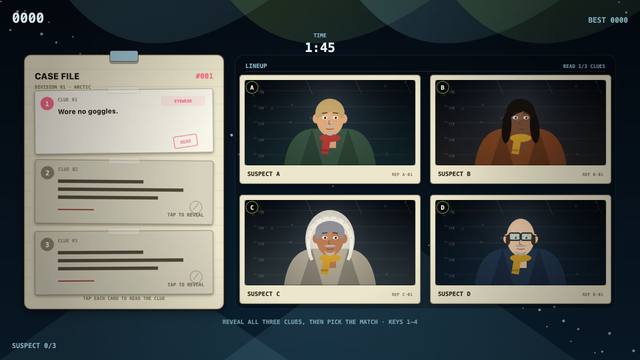
Cold Case
2DRead three clues in an arctic case, then pick the matching suspect before time and strikes close in.
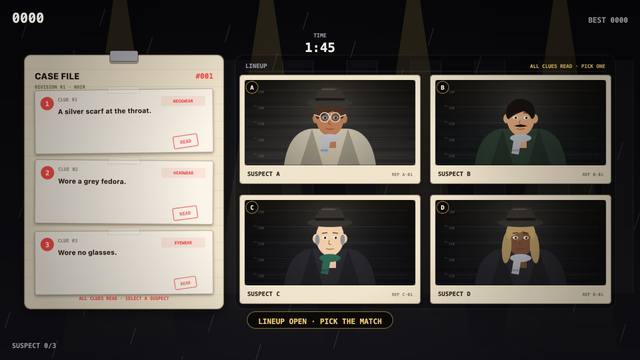
Neon Stakeout
2DRead three clues, pick the matching suspect, and name them before the clock and strikes run out.
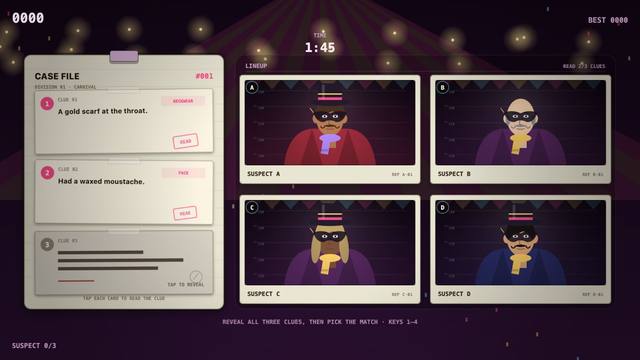
Midway Mystery
2DCompare three clues, choose the suspect who fits, and lock the answer before carnival lights and the clock run out.
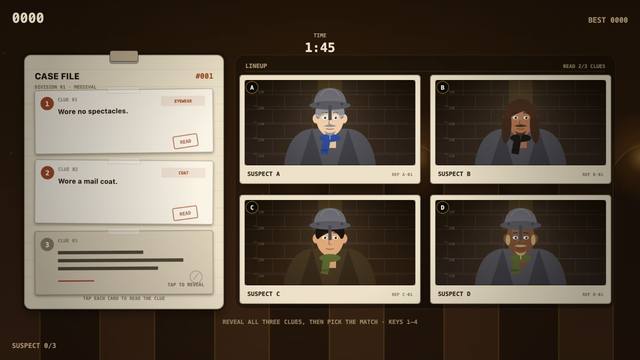
Castle Case
2DRead three clues about a castle suspect, then name the one they describe before the timer and strikes run out.
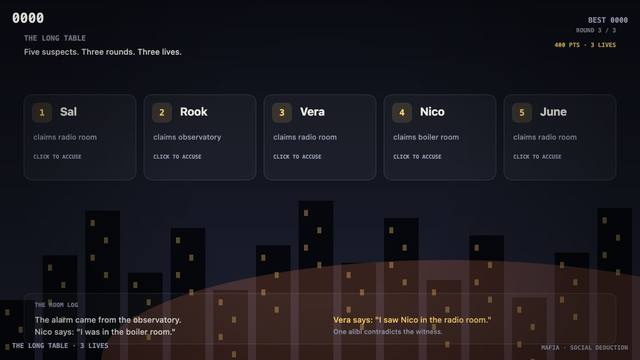
Table of Liars
2DFive alibis, one contradiction, and a table that will not vote twice.
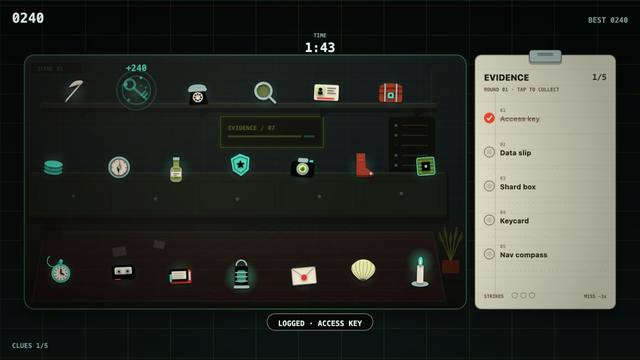
Data Detective
2DSearch black-glass cyberpunk rooms for named objects before the timer drains and wrong taps add strikes.
The six parts of a case
Use these checks when the brief depends on deduction. They matter less for a story-first adventure where the mystery is scenery rather than the loop.
A clue you can find
The player needs a visible object or statement that rewards attention. If the clue is hidden under a pixel-perfect hover, the case becomes a search test.
A suspect with a story
Each suspect should have a claim that can be checked. A cast of blank portraits gives the player nothing to compare.
One contradiction
The case needs a single fact that cannot be true alongside another. The player should be able to point at the pair, not guess the mood.
An accusation with a cost
Committing to a suspect should feel different from browsing. A wrong accusation should close a door or spend a life, not just show a red message.
A notebook the player can trust
Found clues need a place to live. If the game remembers nothing, the player is forced to hold the whole case in their head.
A solution that explains the clues
The ending should retell the evidence in order. A twist that ignores the clues turns the case into a coin flip.
The full detective shelf
Browse all Detective matches →| Build | Genre | Input |
|---|---|---|
| Cold Case | deduction puzzle | mouse or tap |
| Neon Stakeout | noir deduction | mouse or tap |
| Midway Mystery | carnival deduction | mouse or tap |
| Castle Case | deduction | mouse or tap |
| Table of Liars | social deduction | mouse or touch |
| Data Detective | hidden object mystery | mouse or tap |
| Case File | puzzle | mouse or tap |
| Case Zero | school roguelike | keyboard or touch |
| Dune Clues | hidden-object deduction | mouse or tap |
| Ash Files | hidden-object deduction | mouse or tap |
| Ruin Evidence | clue search | mouse or tap |
| Dust Alibi | clue-finding mystery | mouse or tap |
| Dream Suspects | suspect deduction | mouse or tap |
| Reef Case | hidden object | mouse or tap |
| Night Vote | social deduction | mouse or touch |
| Quiet Cell | social deduction | mouse or touch |
| Misremembered | detective | mouse or touch |
| County Line | detective | mouse or touch |
| Bloom in the Dark | narrative puzzle | mouse or touch |
Swipe the table to see input.
Where an AI detective game generator stops
- Scoping a first case around one scene and one contradiction.
- Comparing hidden-object, alibi and social-deduction loops.
- Testing whether an accusation feels earned.
- Writing a multi-case story with a recurring cast.
- Building a save system for clues and testimony.
- Proving that a generated mystery is fair without a human edit.
- Sixteen short browser cases and deduction tables.
- No voice acting, case file export or season-long arc.
- No claim that any build is a complete detective campaign.
What detective tool pages promise
Detective tools usually promise a mystery from a prompt. This shelf shows what the case actually asks the player to notice, compare and accuse.
| Part | Tool pages promise | What this shelf gives you |
|---|---|---|
| Case structure | A prompt can suggest a crime, a cast and a twist. | Every build has a playable scene and a visible accusation step. |
| Clue fairness | Hard to judge until the generated case is played. | You can check whether the clue is findable and the contradiction is stated. |
| Story volume | Generation can produce case variants quickly. | Each build is one short case, not a season of episodes. |
| Full game | A tool may promise a complete narrative game. | These are prototypes and small cases, not finished detective products. |
Swipe the table to read all three columns.
How matching works
The matcher starts with “detective mystery deduction” and returns the closest playable build on this shelf. Read the matching method → Not sure which shelf fits?Open the genre map →
Detective questions
What counts as a detective game here?
A detective game here starts with a findable clue and ends with an accusation you can defend. 19 builds cover hidden-object cases, alibi puzzles and three social-deduction tables. None has a voice-acted cast or a season of episodes; the shelf is a test of clue fairness and the logic of the reveal.
What is a detective AI game maker?
This page is a playable case shelf, not a mystery writer. 19 builds let you compare how a scene is searched, how an alibi is contradicted and how a table of suspects behaves. The matcher returns one case from your brief so you can judge the clue loop before you ask for a story.
Can I make a detective game with AI?
Play Cold Case and find the contradiction before you accuse anyone. Then write a brief that names the clue, the suspect and the reason the two disagree. A model can add a cast later; it cannot invent fairness if the first contradiction is not visible in play.
Is there a detective game generator?
No generator lives here. A tool page can promise a cast and a twist; the shelf shows whether the clue is findable and whether the accusation has a basis. That is the part a generated mystery usually fails, and the part you can test in one short case.
Are these detective games free?
All sixteen cases and tables are free to play in a browser. No account, no download and no ad gate; mouse and touch work. Remix and export are not open yet. Play one case first, because the shelf is for testing the clue loop, not a finished season.
Do browser detective games work on a phone?
They work on a phone with touch, though a busy scene benefits from a larger screen. Data Detective is the best first test because the clue list and the file names agree; Cold Case is easier to read on a phone when the contradiction is short. Check the tap targets.
Which detective games should I play first?
Start with Cold Case for the alibi, then Table of Liars for the social read. Data Detective adds a desk search. Two cases are enough to see whether the shelf is testing deduction or just hidden objects; write down which one you would brief.
Sources and definitions
- Detective fictionGenre context for clues, suspects and accusation.
- DeductionThe reasoning pattern behind alibi and contradiction puzzles.