Family: Create and connect
Multiplayer AI game maker
A multiplayer AI game maker has to make the shared screen and the turn readable before it adds a lobby. Multiplayer is a field guide with one playable build. Classic Pool supports two players on one keyboard. There is no online lobby, netcode or matchmaking here, and the page does not pretend there is.
What makes a local multiplayer game hold up?
Local multiplayer is a conversation on one screen. Both players need to read the same board, the turn needs to be clear, and the downtime between turns needs a rhythm. If one player is waiting without a read, the shared screen becomes a solo game with an audience.
This shelf has one build: Classic Pool. Two players share a keyboard, call shots and clear the table. It is enough to test a turn and a cue line, not enough to claim a multiplayer platform. The page is a field guide because the shelf is thin.
That makes the test narrow and useful. A model can describe a lobby and a match. The shelf shows whether a shared screen reads, whether a turn has weight and whether a second player has a reason to stay.
Start with these builds
1 REAL BUILDS · NOT MOCKUPS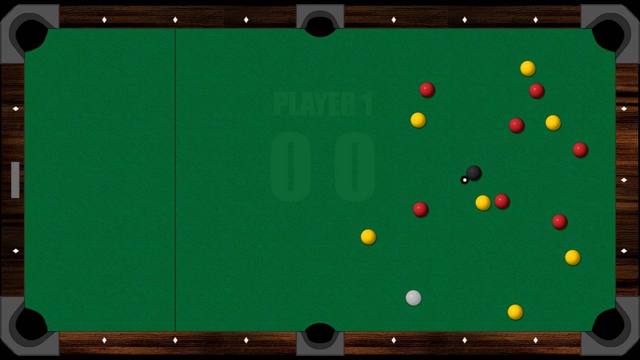
The six parts of a local multiplayer game
Use these checks when the brief depends on one shared screen and a turn. They matter less for an online multiplayer game, where netcode and matchmaking carry more of the loop.
A shared screen
Both players need the same information. A camera that hides half the board is a solo game with a guest.
A turn
The turn should be clear and short. A long turn without a read is downtime for the other player.
A cue line
The aim should be visible to both players. A hidden line turns a skill game into a guess.
A foul
A foul should cost something and be visible. A rule that only the code knows is not a shared rule.
A match length
A short match needs a clear end. One rack is enough if the table stays interesting.
A restart
The next rack should start immediately. A menu between racks breaks the shared rhythm.
The full multiplayer shelf
Browse all Multiplayer matches →| Build | Genre | Input |
|---|---|---|
| Classic Pool | sports | keyboard + mouse |
Swipe the table to see input.
Builds by subgenre
What this shelf can and cannot prove
- Testing whether a shared screen and a turn read.
- Checking the local two-player input.
- Finding the first rack for a local multiplayer brief.
- Online lobbies and matchmaking.
- Rollback netcode and latency compensation.
- A co-op campaign with shared progression.
- One local two-player pool build.
- No online play or netcode.
- No lobbies, ranks or friends list.
What an AI multiplayer maker promises
Tool pages promise online lobbies, netcode and matchmaking. A one-build shelf cannot prove a multiplayer platform. It can show you whether a shared screen reads, whether a turn has weight and whether a second player has a reason to stay.
| Part | Tool pages promise | What this shelf gives you |
|---|---|---|
| Netcode | Online lobbies, rollback and matchmaking. | One local two-player pool build. No online netcode. |
| Shelf scope | A claim to cover the whole genre. | Local pool |
| What it cannot prove | A finished game in every mode. | Online lobbies and matchmaking. |
Swipe the table to read all three columns.
How matching works
The matcher starts with “multiplayer” and returns the closest playable build on this shelf. Read the matching method → Not sure which shelf fits?Open the genre map →
Multiplayer questions
What is a Multiplayer AI game maker?
On this site, it is a shelf, not a generator. Multiplayer is a field guide with one playable build. Classic Pool supports two players on one keyboard. There is no online lobby, netcode or matchmaking here, and the page does not pretend there is.
Is there online multiplayer?
No. Classic Pool is local two-player on one keyboard. There is no online lobby, matchmaking, rollback netcode or friends list on the shelf. A multiplayer game generator would have to prove that layer; this page does not. A local build cannot test lag, matchmaking or a second machine.
How many players can play?
Two, sharing one keyboard and mouse. The rest of the site is single-player, so this is the only local multiplayer build currently published. If you want to make a multiplayer game with AI, start by testing whether two players can share this screen.
How many multiplayer game builds are there?
1 multiplayer game builds. Each row in the table above is a separate build; the input column comes from its config. The count is deliberately visible because a single build cannot support a genre claim. Classic Pool is the only local two-player game currently published, and the table above is the full shelf.
What can this multiplayer game shelf not prove?
It can show testing whether a shared screen and a turn read, but it cannot online lobbies and matchmaking. One local two-player pool build. It can test a shared screen and a turn, but not a lobby, a friends list or a rollback stack.
Sources and definitions
- Multiplayer video gameWikipedia: the wider genre and the local/online split.
- Pool (cue sports)Wikipedia: the table game Classic Pool borrows from.
More shelves in this family
The Multiplayer shelf covers Local pool. Start with Sandbox, then compare the rest of the family.