Part of the Action shelf
Stealth AI game maker
A stealth AI game maker has to make top-down and side-view legible before it adds features. A stealth game is a vision cone, a patrol and a mistake the player can recover from. This shelf has 14 builds. Play one before you ask a model to invent a stealth game.
What a stealth shelf has to prove
Stealth is information design. The player needs to see the guard's cone, understand the cover and know whether the alarm is rising or resetting. The builds here split that problem into small rooms: some are top-down sneak boxes, some are side-view heists, and some are chase scenes that begin when the detection meter fills.
14 builds can show whether a patrol is readable and whether a mistake has a consequence. They cannot show a immersive-sim level with a hundred systemic reactions or a full narrative campaign. The page keeps that boundary explicit.
A stealth brief is mostly a visibility contract. The player needs to know what can see them, how far the sight reaches, and what breaks the line of sight. If the cone is invisible, the game becomes guessing; if cover is decorative, the route stops mattering. Write those three rules before you ask for guards, gadgets or a story. Then choose one room that proves them: a single patrol, one piece of cover, and an exit that is visible from the start. Ice Blind and Dune Shadow are good tests because the light does the work; Chameleon is the cleaner control. Play one, fail once, and describe what you saw before the alarm. That description is more useful to a model than a list of stealth features, because it tells the model which read the room has to protect.
Start with these builds
6 REAL BUILDS · NOT MOCKUPS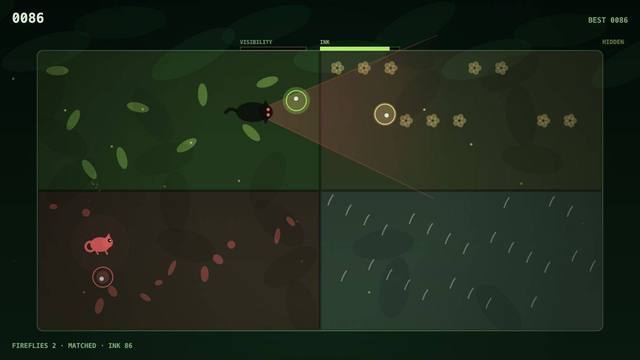
Chameleon
2DMove through leaf shadow, paint yourself to match the canopy, and slip past guardians before their cones find you.
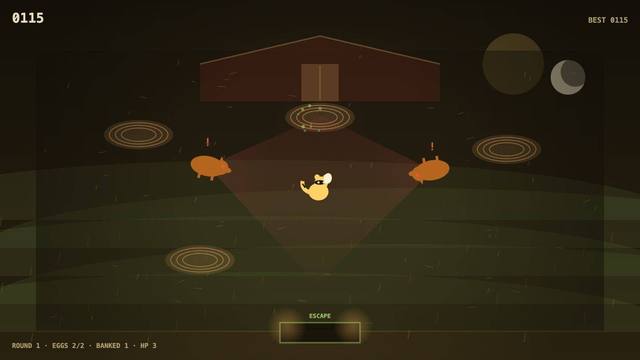
Egg Thief
2DCross open dust past the guardian's vision cone, lift a single egg, and outrun it on the way back.
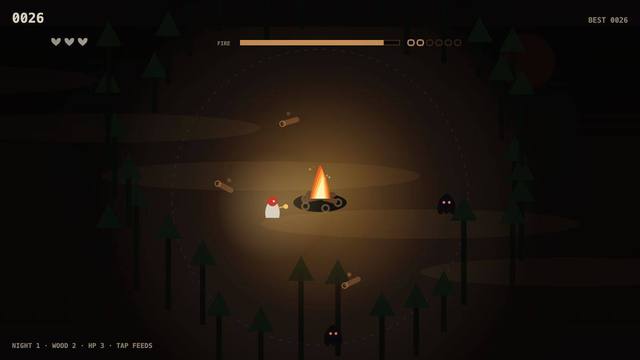
Night Ninety-Nine
2DCount nights in a fogged forest, moving between candle amber pools while guardians sweep the dark.
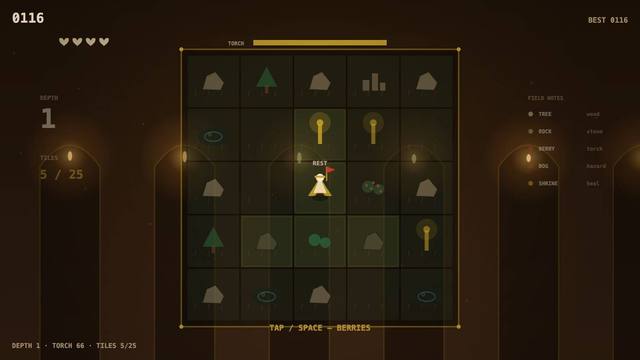
Tiny Frontier
2DCross five tiles of torchlit stone, slipping past guard sightlines to take the objective and get out.
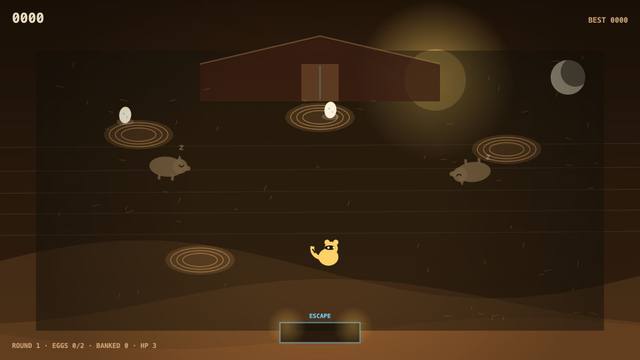
Dune Shadow
2DMove between shadow and hard blue sky, staying out of the light while the heat shimmer gives away every open stretch.
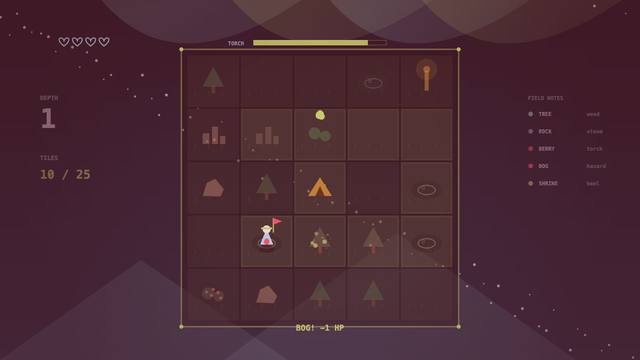
Ice Blind
2DCross the polar dark, read guardian sightlines, take the objective, and leave without crossing the light.
The six parts of a stealth room
Use these checks when the brief depends on patrols and detection. They matter less for an action game with a stealth option.
A vision cone you can read
The guard's sight should be visible before the player steps into it. A cone that only appears after detection is a trap, not a puzzle.
A patrol with a rhythm
A patrol needs a pause, a turn and a predictable gap. The player should be able to plan two moves ahead, not memorize a hidden timer.
Cover that changes the cone
Cover should block sight, not just bullets. The player needs to see which side of a crate is safe.
A detection meter
Detection should rise, pause and reset in a way the player can read. A binary spotted/not spotted state gives no room to recover.
A mistake with an escape
Getting seen should open a chase or a reset, not end the run instantly. The escape is part of the stealth fantasy.
A reason to stay unseen
The objective should reward patience: a key, a file, a clean exit. If loud is always faster, stealth is decorative.
The full stealth shelf
Browse all Stealth matches →| Build | Genre | Input |
|---|---|---|
| Chameleon | stealth | keyboard or touch |
| Egg Thief | stealth heist | keyboard or touch |
| Night Ninety-Nine | stealth survival | keyboard or touch |
| Tiny Frontier | stealth | keyboard or touch |
| Dune Shadow | top-down stealth | keyboard or touch |
| Ice Blind | stealth | keyboard or touch |
| Ash Veil | stealth | keyboard or touch |
| Noir Stakeout | stealth | keyboard or touch |
| Ruin Whisper | stealth | keyboard or touch |
| Midway Shadow | stealth | keyboard or touch |
| Dust Trail | stealth | keyboard or touch |
| Sleepwalker | stealth | keyboard or touch |
| Pine Shutter | stealth horror | keyboard or touch |
| Slack Master | stealth | keyboard or touch |
Swipe the table to see input.
Where an AI stealth game generator stops
- Testing whether a cone, a patrol and a detection meter are legible.
- Comparing top-down, side-view and chase structures.
- Scoping a first stealth room around one guard and one objective.
- Building an immersive sim with systemic guard reactions.
- Authoring a multi-level campaign with a persistent story.
- Balancing a large toolset of distractions and disguises.
- Twelve short browser stealth rooms with local AI.
- No voice acting, dialogue tree or large hub level.
- No claim that any build is a complete commercial stealth game.
What stealth tool pages promise
Tool pages promise a stealth game from a sentence. This shelf shows whether a cone, a patrol and a mistake actually read in play.
| Part | Tool pages promise | What this shelf gives you |
|---|---|---|
| Vision | A prompt can describe guard sight. | Every build shows the actual cone or sight line. |
| Patrols | Often described as a feature, not demonstrated. | You can watch the loop and learn the gap. |
| Campaign | Some tools promise a full stealth campaign. | These are single rooms and short chases, not a campaign. |
| Full game | A tool may promise a complete stealth game. | These are prototypes and small arcade rooms, not full products. |
Swipe the table to read all three columns.
How matching works
The matcher starts with “stealth” and returns the closest playable build on this shelf. Read the matching method → Not sure which shelf fits?Open the genre map →
Stealth questions
What counts as a stealth game here?
The shelf treats stealth as a visibility problem, not a combat mode. You get top-down rooms, side-view routes and a few heist scenarios where the alarm is the real enemy. 14 builds, short runs, and no campaign that hides the detection rules behind a cutscene.
What is a stealth AI game maker?
This page is a reference shelf, not a model. It collects twelve playable stealth builds so you can compare how each one shows a cone, a patrol and a mistake. The matcher picks the closest build to your brief; the point is to feel the read before you ask for one.
Can I make a stealth game with AI?
You can, but the brief should start with visibility. Play Chameleon first and describe what you saw before the alarm: the cone, the cover, the exit. Then ask a model to preserve that read. A list of guards and gadgets is less useful than one sentence about what the player must notice.
Is there a stealth game generator?
Not here. Tool pages promise patrols, vision cones and generated levels; this shelf shows whether a cone is visible, whether cover matters, and whether a failed route teaches you anything. The hard part is the detection contract, not the guard model.
Are these stealth games free?
All 14 builds are free browser demos. No signup, no download, no ad gate. Input is keyboard or touch, and the game page lists the controls. Paid remix and export are not open yet, so play one room before you commission a larger stealth project.
Do browser stealth games work on a phone?
Most do, though small screens make a wide cone harder to read. Ice Blind and Dune Shadow are the cleaner tests because light and shadow carry the information. Start with Chameleon on the device you will use; if the cone is hard to see, the brief needs a stronger visual rule.
Which stealth games should I play first?
Play Chameleon for the basic patrol read, then Ice Blind for a route built on light and shadow. Dune Shadow adds open-space timing. Two rooms are enough to see whether the shelf is teaching you the same rule or three different ones.
Sources and definitions
- Stealth gameGenre context for patrols, vision and alarms.
- Artificial intelligence in video gamesHow guard states and detection are usually structured.