Part of the Puzzle shelf
Block Puzzle AI game maker
A block puzzle AI game maker has to make the piece, the grid and the line clear readable before it adds speed. This shelf has 6 builds: three grid packers, a falling-block classic and two stackers. Play one before you ask a model to invent a block game.
What a block-puzzle shelf has to prove
The first question is whether the player can see where a piece will land. Block Fit drags a polyomino onto a grid; Tetris rotates a tetromino in a well; Dune Spire drops one block at a time onto a spire. The 6 builds split between free placement, falling pieces and precision stacking.
A shelf can show whether the next piece is legible, whether a bad placement can be corrected and whether a line clear returns space. It cannot show a modern versus mode, a skin economy or a ranked ladder. Those are live-ops problems.
All six are 2D and single-player: four use mouse or tap, one uses keyboard or touch, and one is keyboard-only.
How we checked this shelf
- We checked every build in the table against the shelf gate: licence clear, loads clean, input works, loop starts, controls documented, and the page holds at 1440 px and 390 px.
- We read placement labels from the build’s grid: free drag (Block Fit, Midway Mind, Sand & Signal), falling well (Tetris) or one-click stack (Stack Grill, Dune Spire).
- Tetris is counted as the falling-block reference even though its catalog genre is “puzzle”; the other five carry a block, stacking or stacker label.
- We checked the table against the build catalog on 23 November 2026. The title and table count both resolve to six builds.
Shelf check log
| Build | What we ran |
|---|---|
| Block Fit | Title → playing after click; run clock +2.35 s; 0 console/network errors. |
| Stack Grill | Title → playing after click; run clock +2.35 s; 0 console/network errors. |
| Midway Mind | Title → playing after click; run clock +2.37 s; 0 console/network errors. |
Sample, not a full regression: three builds per shelf were loaded from the static build. Each moved from the title screen to playing after Space or a click, advanced its run clock and logged no console or network errors. Scores are whatever the build produced during the smoke test, not a skill rating.
Start with these builds
6 REAL BUILDS · NOT MOCKUPS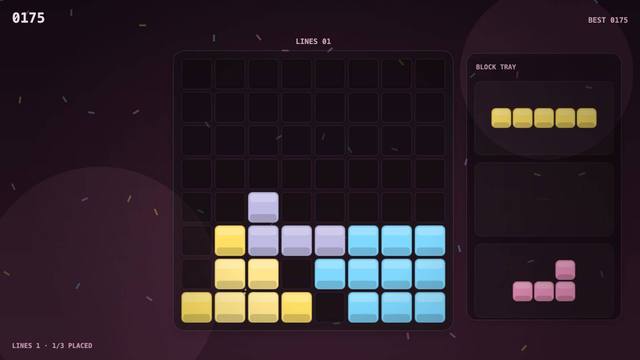
Block Fit
2DDrag blocks onto a sugar-pink grid and clear rows before the board runs out of room.
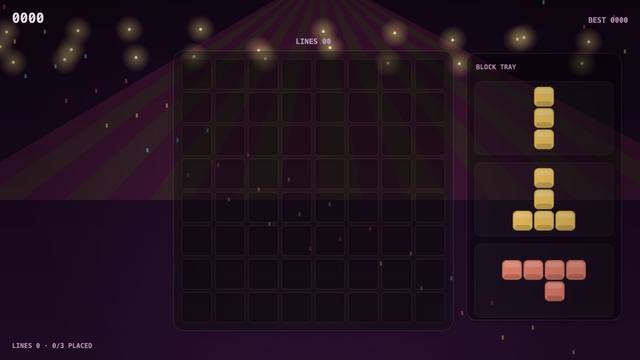
Midway Mind
2DDrop block shapes onto a striped grid and fill rows before the board runs out of room.
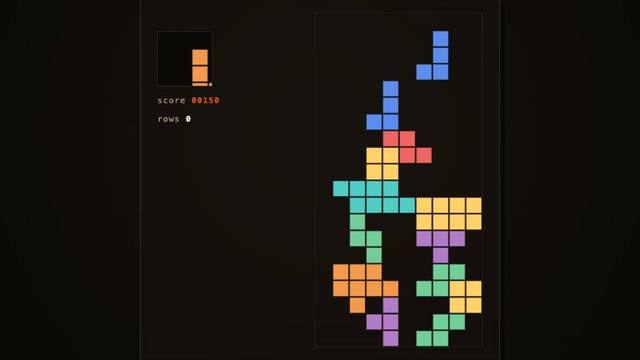
Tetris
2DThe falling-block standard: rotate, stack, clear, repeat.
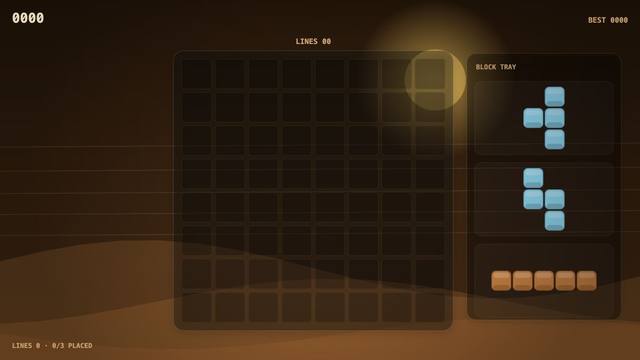
Sand & Signal
2DPlace block shapes onto a tight grid, clear full rows, and keep the board from locking up
Stack Grill
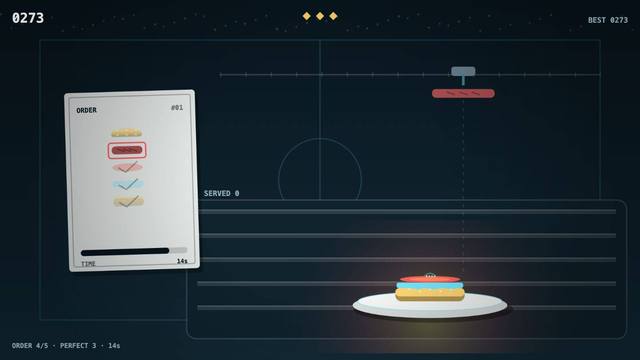
2DA tray slides back and forth under each order item; tap on the line to stack it clean before the pile topples.
Dune Spire
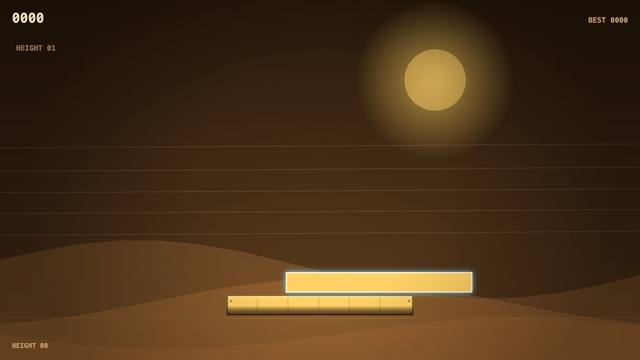
2DDrop blocks onto a rising spire and keep the tower straight while the desert heat shimmers behind every drop.
The six parts of a block puzzle
Use these checks when the brief depends on placement. They matter less for a game where blocks are only a visual style.
A piece you can read
The shape, its orientation and its footprint need to be clear before placement. A piece that only reveals its edges after landing is a guess.
A grid that returns space
A line or column clear should visibly free cells. If the board only grows tighter, the loop is a countdown rather than a puzzle.
A drop you can aim
Falling and stacking builds need a landing preview or a clear column. A one-click drop without a guide turns precision into luck.
A mistake you can see
A misplaced piece should leave a visible gap or a leaning stack. The cost should be spatial, not a hidden penalty.
A speed ramp you can feel
If the build accelerates, the next decision should arrive sooner without hiding the piece. Speed is a difficulty knob, not a tutorial.
A finish you can see
A full board, a topped-out well and a narrowed spire are different failures. The player should know which one ended the run.
The full block puzzle shelf
Browse all Block Puzzle matches →| Build | Genre | Input |
|---|---|---|
| Block Fit | block puzzle | mouse or tap |
| Midway Mind | block puzzle | mouse or tap |
| Tetris | puzzle | keyboard |
| Sand & Signal | block puzzle | mouse or tap |
| Stack Grill | order stacking arcade | keyboard or touch |
| Dune Spire | stacker | mouse or tap |
Swipe the table to see input.
Where a block puzzle AI game maker stops
- Scoping one placement rule with a readable grid and a clear fail state.
- Comparing free placement, falling pieces and stacking.
- Checking whether a line clear actually returns space.
- Building a modern block game with holds, previews and combos.
- Tuning a speed curve across long sessions.
- Shipping a level editor or a versus mode.
- Six short browser builds.
- No hold queue, ranked mode or skin economy.
- No claim that these are complete modern block games.
What block puzzle tool pages promise
Tool pages promise endless block puzzles from a prompt. This shelf shows what the piece, the grid and the line clear actually do.
| Part | Tool pages promise | What this shelf gives you |
|---|---|---|
| Piece generation | A prompt can ask for random or endless pieces. | Each build deals fixed shapes; none has a seeded generator. |
| Difficulty | Often promised as a smooth ramp. | Tetris speeds up; the grid packers shrink space; the stackers narrow the target. |
| Line clear | Usually assumed in the promise. | The grid packers clear rows or columns; the stackers do not. |
Swipe the table to read all three columns.
How matching works
The matcher starts with “block puzzle” and returns the closest playable build on this shelf. Read the matching method → Not sure which shelf fits?Open the genre map →
Block Puzzle questions
What counts as a block puzzle game here?
Block puzzle here means placing shapes on a grid or dropping them into a stack: six builds. Three are grid packers with row clears, one is a falling-block classic, and two are precision stackers. Match-3 and merge games are separate shelves.
What is a block puzzle AI game maker?
This is a reference shelf, not a block generator. Six builds let you compare how a piece is previewed and how space is returned. The matcher picks the closest loop so you can test the placement before writing a brief.
Can I make a block puzzle game with AI?
Start with Block Fit for drag placement, Midway Mind for clustered shapes, or Tetris for falling pieces. Note whether the next piece is visible and how a line clear changes the board. Those two rules are the brief.
Is there a block puzzle game generator?
There is no generator here. A tool page can promise endless block puzzles; the shelf shows fixed pieces, a grid and a fail state. That is enough to judge whether placement is readable before you ask for more shapes.
Are these block puzzle games free?
All six builds play free in the browser, with no account or download. Tetris is the reference falling-block build; Block Fit, Midway Mind and Sand & Signal are grid packers; Stack Grill and Dune Spire are stackers.
Do block puzzle games work on a phone?
The grid packers work on touch because drag maps to a finger; Tetris needs either swipe or buttons. Block Fit is the best first phone test because the grid is large. Check that the piece preview is not covered by your hand.
Which block puzzle should I play first?
Play Block Fit, then Tetris, then Dune Spire. The first teaches free placement, the second teaches falling pieces, the third teaches one-click precision. Three builds show whether the shelf is about space or speed.
Sources and definitions
- TetrisThe falling-block reference that anchors the shelf.
- PolyominoThe shape family behind grid-packing pieces.
- Puzzle video gameThe wider genre that contains block puzzles.