Part of the Puzzle shelf
Physics Puzzle AI game maker
A physics puzzle AI game maker has to make force, contact and failure readable before it adds objects. This shelf has 15 builds: eight slingshot rounds, two crate grids, a maze, a folding merge board, a tilting truck, a wobbling platform run and a chain-reaction office. Play one before you brief a model to invent a physics game.
What a physics-puzzle shelf has to prove
The first question is whether the player can predict the result of a launch. Sand Sling sets an angle and a force, then lets the shot resolve; Temple Push moves a crate one cell at a time; Candy Fold combines two tiles into a piece you must place. The 15 builds split between projectile arcs, grid contact and balance.
A shelf can show whether the trajectory is readable, whether a failed launch is recoverable and whether the score rewards the right contact. It cannot show a full rigid-body engine, a level editor or a tuning pass across hundreds of objects. Those are engineering and content problems.
The shelf is 12 2D builds and three 3D builds: nine use mouse or tap, four use keyboard or touch, one is keyboard-only and one is mouse or touch.
How we checked this shelf
- We checked every build in the table against the shelf gate: licence clear, loads clean, input works, loop starts, controls documented, and the page holds at 1440 px and 390 px.
- We read force labels from the build’s controls: drag-to-launch (eight slings), cell push (Temple Push, Ice Crates), fold (Candy Fold), tilt (Flip Truck) or collapse (Office Smash).
- Pool, orbital and sports builds were excluded because their primary test is aim, orbit or a scored sport, not a force-and-contact puzzle.
- We checked the table against the build catalog on 23 November 2026. The 15-build count includes Astray and Ash Ascent, which are easy to miss in a sling-only count.
Shelf check log
| Build | What we ran |
|---|---|
| Sand Sling | Title → playing after click; run clock +2.35 s; 0 console/network errors. |
| Flip Truck | Title → playing after click; run clock +2.37 s; score 2.49; 0 console/network errors. |
| Candy Fold | Title → playing after click; run clock +2.37 s; 0 console/network errors. |
Sample, not a full regression: three builds per shelf were loaded from the static build. Each moved from the title screen to playing after Space or a click, advanced its run clock and logged no console or network errors. Scores are whatever the build produced during the smoke test, not a skill rating.
Start with these builds
6 REAL BUILDS · NOT MOCKUPS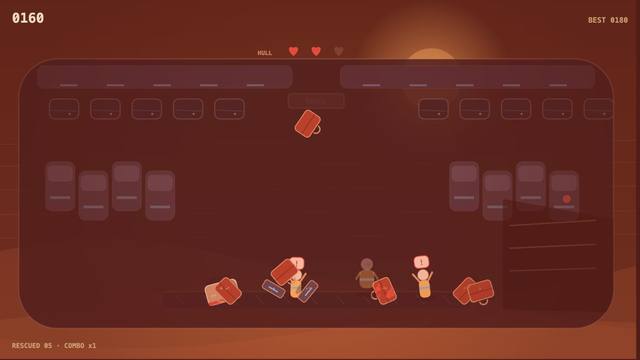
Sand Sling
2DDrag, aim, and release to launch across dune gold and hard blue sky, where each shot is a crash waiting to happen.
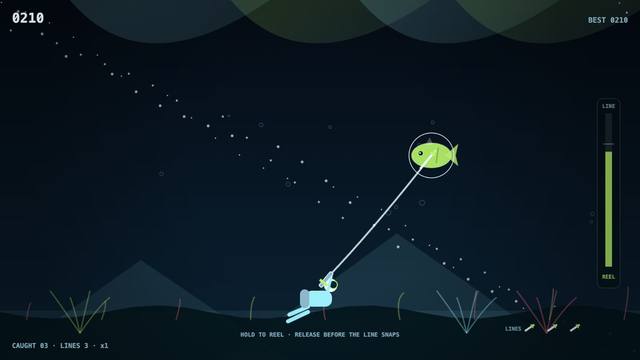
Ice Sling
2DDrag and release to fire across ice blue and aurora green, with harpoon mode making each launch a committed line.
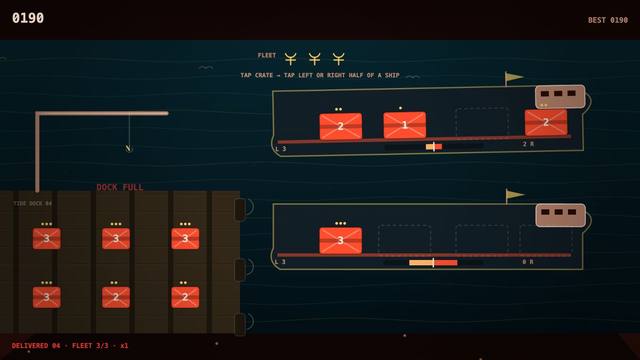
Magma Sling
2DDrag back, release, and watch your load tumble toward a basalt shelf above the lava.
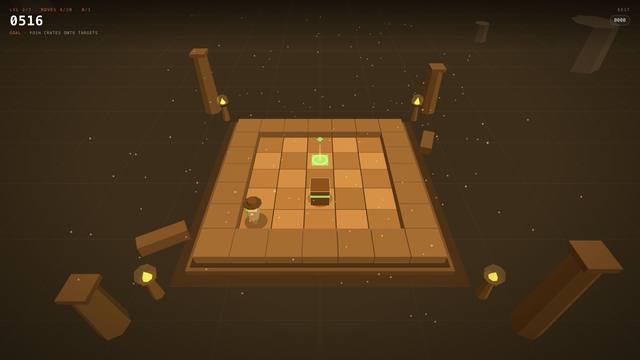
Temple Push
3DPush crates onto glowing tiles across a stone platform, where walls and move count turn each layout into a tight route problem.
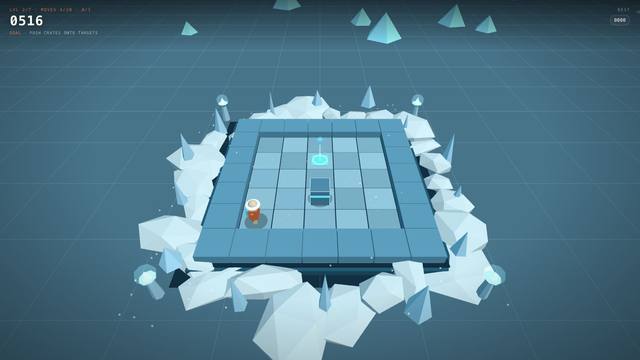
Ice Crates
3DMove crates over ice-blue tiles and count each step, because blocked routes on the stone platform make every push a commitment.
Candy Fold
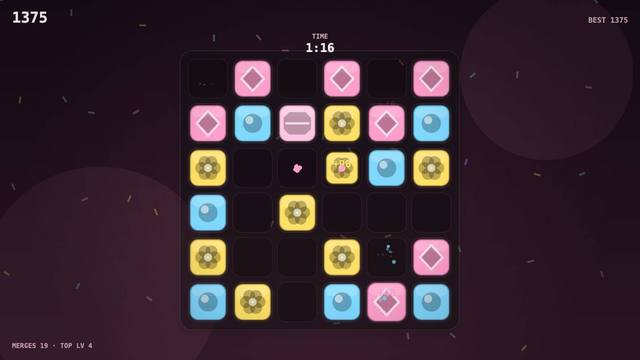
2DFold two candy tiles into a single piece while the board fills, so each merge has to earn its space.
The six parts of a physics puzzle
Use these checks when the brief depends on a force or a contact. They matter less for a game where physics is only decoration.
A force you can read
The player needs an aim, a power and a preview before the shot leaves. A launch that resolves without a readable arc is a slot machine.
A contact you can predict
When two objects meet, the next state should follow from their shapes and weights. Stacked contacts need a stable resting state, not a permanent jitter.
A failure that teaches
A miss should show which variable was wrong: angle, force, timing or balance. A random collapse teaches nothing.
A correction path
Undo, reset or a fast retry is part of the puzzle. If a failed shot costs a long setup, the player stops experimenting.
A score that rewards structure
Points should follow the contact that mattered: a support removed, a stack toppled, a target hit. Surface taps are not a physics score.
A finish that resolves
The round should settle before it scores. A result that appears while the objects are still moving hides the cause.
The full physics puzzle shelf
Browse all Physics Puzzle matches →| Build | Genre | Input |
|---|---|---|
| Sand Sling | physics arcade | mouse or tap |
| Ice Sling | physics arcade | mouse or tap |
| Temple Push | grid puzzle | keyboard or touch |
| Candy Fold | merge puzzle | mouse or tap |
| Office Smash | destruction | mouse or touch |
| Ice Crates | crate puzzle | keyboard or touch |
| Astray | maze game | keyboard |
| Flip Truck | physics driving | keyboard or touch |
| Ash Ascent | physics platformer | keyboard or touch |
| Magma Sling | arcade physics | mouse or tap |
| Rain Sling | physics arcade | mouse or tap |
| Ruin Sling | demolition physics | mouse or tap |
| Confetti Sling | physics arcade | mouse or tap |
| Cactus Toss | physics arcade | mouse or tap |
| Cloud Sling | physics arcade | mouse or tap |
Swipe the table to see input.
Where a physics puzzle AI game maker stops
- Scoping one force model with a visible arc and a clear fail state.
- Comparing slingshot, crate and balance puzzles on one shelf.
- Checking whether undo covers the whole experiment.
- Building a general rigid-body engine with stacked contacts.
- Tuning dozens of materials, masses and friction pairs.
- Shipping a level editor that players can trust.
- Fifteen short browser puzzles.
- No material editor and no custom physics tuning.
- No claim that one build covers every collision case.
What physics puzzle tool pages promise
Tool pages promise realistic physics from a prompt. This shelf shows what the launch, the contact and the retry actually do.
| Part | Tool pages promise | What this shelf gives you |
|---|---|---|
| Physics fidelity | A prompt can ask for realistic gravity and collisions. | Eight slingshot builds share one launch model; two crate grids use cell contact. |
| Level design | Often promised as generated or endless. | Fixed boards and short rounds; none of these builds has a generator. |
| Undo | Rarely mentioned in the promise. | The crate grids expose undo and reset; slingshot rounds restart in one input. |
Swipe the table to read all three columns.
How matching works
The matcher starts with “physics puzzle” and returns the closest playable build on this shelf. Read the matching method → Not sure which shelf fits?Open the genre map →
Physics Puzzle questions
What counts as a physics puzzle game here?
Physics puzzle here covers projectile launches, crate pushing, folding merges, a tilting truck and a chain-reaction office. Fifteen builds, from eight slingshot variants to two grid puzzles. Pool and orbital simulations are left out because they belong to sports and simulation shelves.
What is a physics puzzle AI game maker?
This is a reference shelf, not a physics engine. The 15 builds let you test whether force, contact and failure are legible. The matcher picks the closest loop, so you can judge the read before you ask a model to generate objects.
Can I make a physics puzzle game with AI?
Start with Sand Sling for a launch, Temple Push for contact, or Candy Fold for a merge that changes the board. Watch what the build shows before the shot resolves. Write that preview into the brief; a model can add objects after the force model is readable.
Is there a physics puzzle game generator?
No generator lives here. A tool page can promise realistic physics; the shelf shows fixed rounds, a restart and a score. That is enough to see whether the player can predict a collision, which is the hard part of a physics puzzle.
Are these physics puzzle games free?
All 15 builds are free in the browser, with no signup or download. Eight are slingshot rounds with different loads, two are crate grids with undo, and the rest are a maze, a fold board, a tilting truck, a wobble run and an office collapse.
Do physics puzzle games work on a phone?
The slingshot rounds work on touch because drag-to-launch maps to a finger. Crate grids and the folding board need precise taps; Temple Push is the better phone test. Check whether the undo button stays reachable before you judge the control.
Which physics puzzle should I play first?
Play Sand Sling, then Temple Push, then Office Smash. The first teaches a launch, the second teaches contact, the third teaches chain reaction. Three rounds show whether the shelf is about prediction or decoration.
Sources and definitions
- Puzzle video gameThe broader genre that contains physics puzzles.
- Angry BirdsThe slingshot loop that popularised the launch puzzle.
- Rigid body dynamicsThe simulation model behind stacked contacts and collisions.